
Applied AI
I design systems where models, data, automation, and human control address a concrete operational problem.
Profile and public identity
Background, areas of work, research identity, and professional channels connected to the official domain.
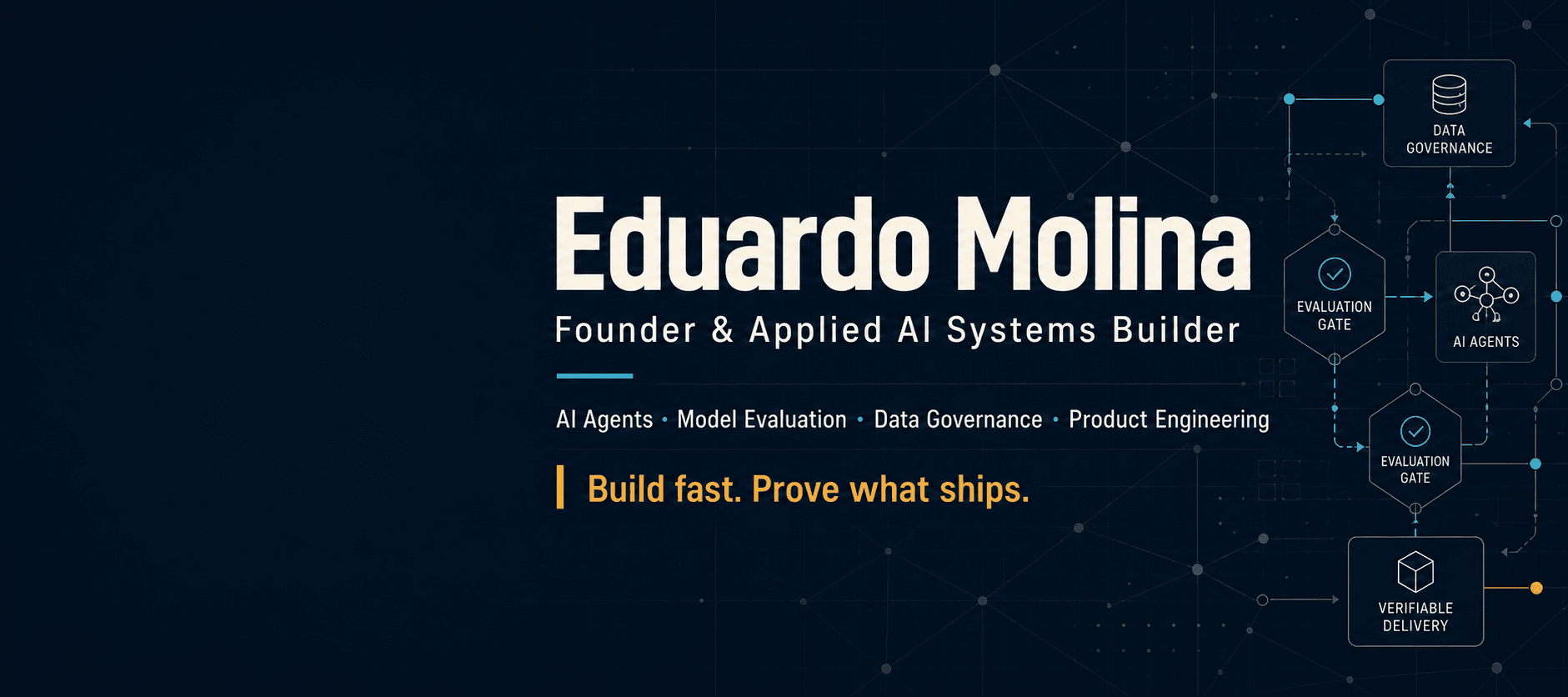
Background
I am Eduardo Molina, a founder and builder of applied artificial intelligence systems, digital products, and platforms. I work from problem definition through architecture, evaluation criteria, and commercial delivery. My experience combines software, automation, product, marketing, and growth.
How I work
Speed matters after the decision, scope, and required evidence are clear. This method keeps those boundaries visible throughout the work.
Separate the need, users, decision, and boundaries before selecting technology.
Turn context into reviewable architecture, experience, data, responsibilities, and controls.
Separate demonstration, test, and measured outcome with visible evidence and limitations.
Connect product, positioning, and commercial operations without inventing price, availability, or promises.
Areas of work
I design systems where models, data, automation, and human control address a concrete operational problem.
I connect architecture, experience, evaluation, and commercial delivery to build products that can be tested and improved.
I define criteria, evidence, boundaries, and authority before presenting a demonstration as a real capability.
I work across positioning, marketing, and sales so a useful solution is also understandable and commercially defensible.
Collaboration paths
Structure a problem, compare options, and define the next test before committing to a build.
Explore services →Turn a validated need into scope, architecture, experience, and exit criteria.
Explore collaboration →Align positioning, identity, and the commercial path so the solution can be understood and assessed.
Share the context →Public presence
These links correspond to observed public surfaces. Each platform retains its own scope; appearing here does not turn a draft, dataset, or experiment into published research or a measured outcome.
Research and evidence
The ORCID identity connects verifiable work when it exists. OSF, Kaggle, and technical profiles organize real, reproducible, rights-cleared materials; they do not manufacture publications, credentials, or outcomes.